WorkflowsHeyOz
Reel Flopped? Don't Delete It. Use This AI Prompt to Find Out Why
The exact prompt we use to have an AI watch a flopped Reel or TikTok, say where viewers drop off, and list experiments to re-run with the same footage.
■ The short answer
- When a video flops, the footage usually isn't the problem. The edit is. The same clip posted at the same time can get thousands of views or millions depending on the first 3 seconds, the pacing and the ending.
- Instead of deleting it, give the video to an AI that can actually watch video, and ask for experiments, not compliments.
- The prompt: Analyze this video and explain what experiments I can do with the same video to improve the retention and the skip rate.
- Re-cut one change at a time, post each version, and compare the share of viewers who get past 3 seconds and the average watch time.
■ Workflow at a glance
- Pick the flopped video — Download the original file, not a screen recording, so the AI sees the real pacing and audio.
- Upload it to an AI that watches video — It needs a model that analyses the video frames and sound, not just the caption. We use the Oz Agent on HeyOz.
- Paste the prompt — Analyze this video and explain what experiments I can do with the same video to improve the retention and the skip rate.
- Re-cut one change per version — Take the experiments it lists and make one new edit per experiment, so you know which change moved the numbers.
- Post and compare — Keep the audience and timing similar, then compare the 3-second hold rate, average watch time and completion across versions after 3–4 days.
This is the guide from our “same video, more views” Reel. Two videos, the same footage, posted at the same time: one got 4.2 million views, the other 3,323. The difference wasn’t hashtags, captions or posting time. It was how the video held people in the first few seconds.
So when a video flops, don’t delete it. Find out why it lost people, then re-run the same footage with one change at a time.
The prompt
Analyze this video and explain what experiments I can do with the same video to improve the retention and the skip rate.It works because it asks for two things AI usually skips: a diagnosis (where and why people leave) and experiments you can run with footage you already have. Without that second part, most AI tools just tell you the video is “engaging” and suggest posting more.
What the AI found in our test video
We used an 11-second ASMR product clip: a spoon cracking a dessert shell, hands only, no words. We gave it to the Oz Agent on HeyOz with the prompt above. It split the answer into three parts.
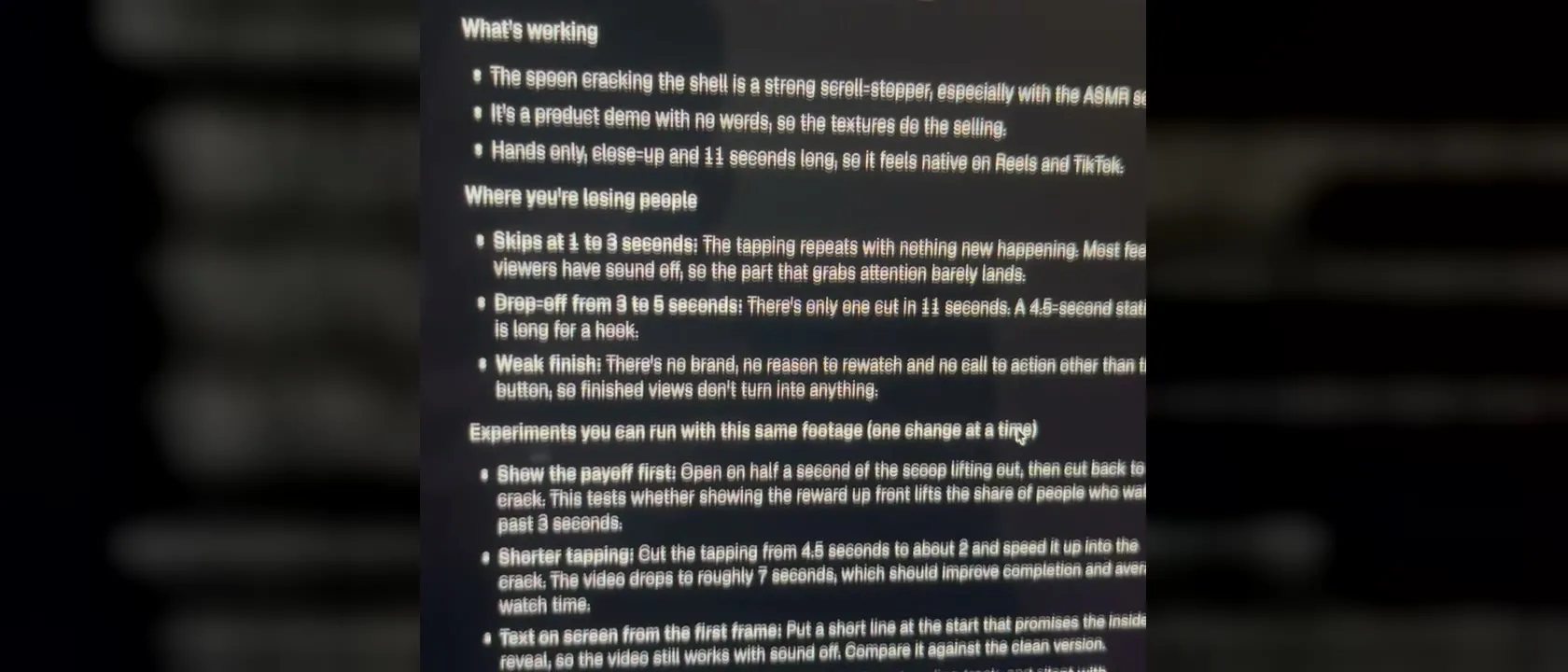
What’s working: the crack is a strong scroll-stopper, the textures do the selling without words, and the hands-only close-up feels native to Reels and TikTok.
Where it was losing people:
- Skips at 1–3 seconds. The tapping repeats with nothing new happening, and most people scroll with the sound off, so the part meant to grab attention barely lands.
- Drop-off at 3–5 seconds. There’s only one cut in 11 seconds. A 4.5-second static opening is long for a hook.
- A weak finish. No reason to rewatch and no call to action, so people who watched to the end didn’t do anything next.
Experiments to run with the same footage (one change at a time):
- Show the payoff first. Open on half a second of the final reveal, then cut back to the start.
- Shorter build-up. Cut the tapping from 4.5 to about 2 seconds, which brings the video down to roughly 7.
- Text on screen from the first frame. One short line that promises the reveal, so it works with the sound off.
- Three sound versions: louder ASMR, a trending track, and silent with captions.
- More cuts. A zoom-in on the crack and slow motion on the reveal, so something new happens every 1–1.5 seconds.
- A seamless loop. End on a frame that matches the opening so replays count toward watch time.
- A branded ending versus ending on the bite, to see whether the extra branding costs you completions.
It also said how to read the results: use the share of viewers who get past 3 seconds to measure skip rate, and average watch time plus 50% and 95% completion to measure retention. Wait 3–4 days before you pick a winner.
How to read the results
Change one thing per version. If you change the hook, the music and the length at the same time and it works, you won’t know which change did it. Start with the experiments that touch the first 3 seconds, because that’s where most views are lost.
Write down what you learn. After a few rounds you’ll know which hooks and pacing your audience responds to, and you can build them into new videos from the start instead of fixing them later.
Which tool to use
The prompt only works if the AI actually watches the video, frames and sound. A tool that only reads your caption or a single thumbnail can’t tell you the tapping drags on for 4.5 seconds. We used the Oz Agent on HeyOz because it takes the video file directly and can also make the re-cuts it suggests. Any model that analyses full video will work with the same prompt.
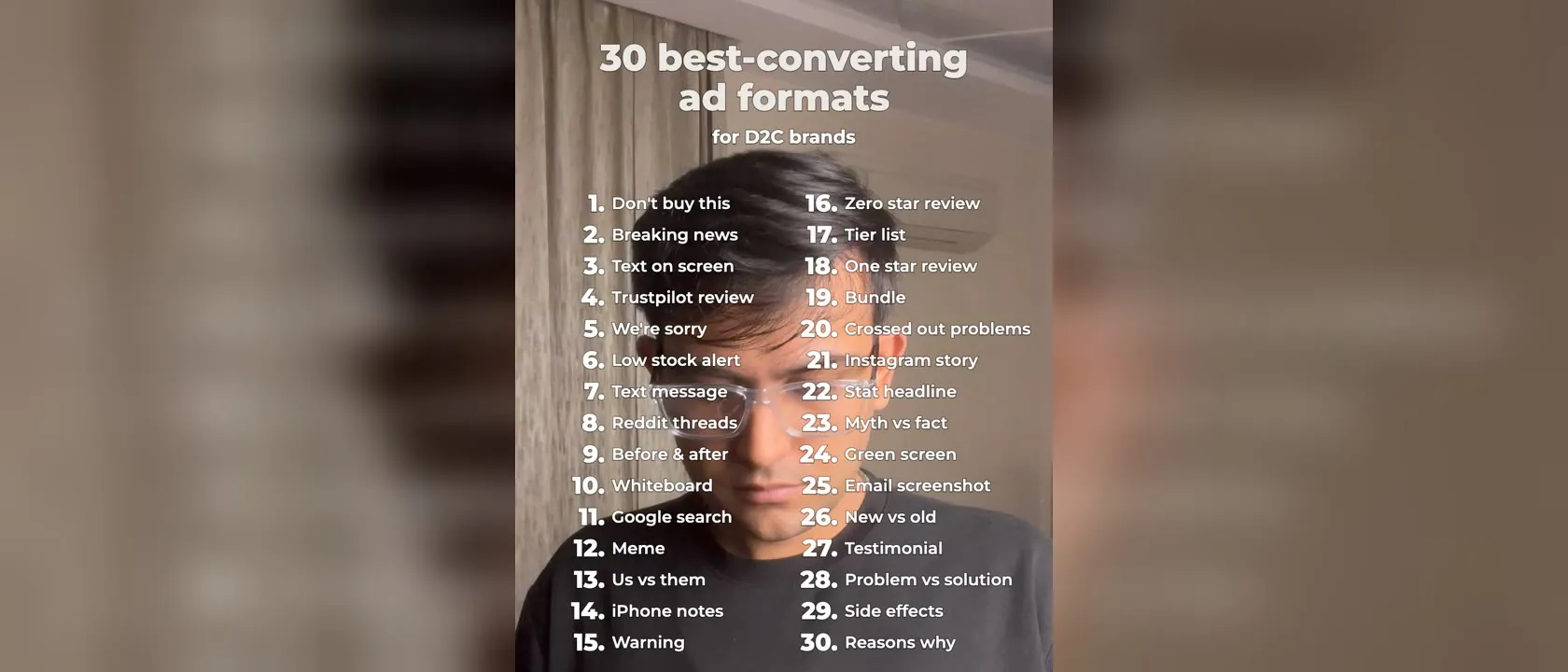
For the hooks and formats worth testing, see our 30 best-converting ad formats with AI prompts. For making new footage, see how to make product videos inside Claude.
Frequently asked questions
Why did my Reel flop when a similar one went viral?
Usually because of the first 1–3 seconds, slow pacing or a weak ending, not the hashtags, caption or posting time. Viewers decide whether to skip almost immediately, so small edit changes can have a big effect on reach.
Should I delete a Reel that flopped?
Not before you learn from it. A flopped video is a free test: diagnose where people drop off, re-cut the same footage with one change, and post the new version.
What is skip rate on Instagram Reels?
It's the share of viewers who swipe away in the first few seconds. A high skip rate means the opening isn't stopping the scroll, so that's where to change things first.
Can ChatGPT watch my video?
Only some AI tools analyse the actual video frames and audio. Many chat apps only see a still frame or the transcript, which misses pacing and sound. Use a tool that says it watches the full video.